
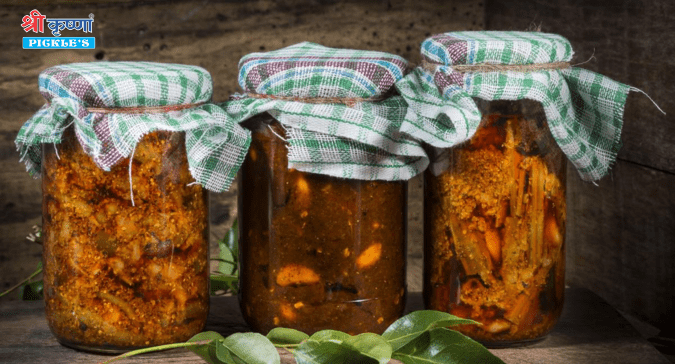
How to store homemade pickles long term is a question every pickle lover asks, especially when they’ve gone the extra mile to prepare pickles at home or buy handmade varieties like ours at Shri Krishna Pickles. Whether it’s spicy mango pickle, tangy lemon, or crunchy carrot and green chili, storing pickles the right way can keep them fresh, flavorful, and safe for years.
In this blog, we’ll reveal the best way to store pickles without refrigeration, how to maintain their crunch, and traditional pickle preservation methods that have stood the test of time.
Why Proper Pickle Storage Matters
Pickles are made to last—but without the right pickle storage methods, they can spoil, lose flavor, or become too soft. Since homemade pickles don’t contain artificial preservatives like store-bought versions, proper care is crucial to ensure long shelf life and taste.
Best Way to Store Pickles Without Refrigeration
One of the most traditional and best ways to store pickles without refrigeration is by using sterilized glass jars and enough oil or brine. Here are a few key tips:
Use Clean, Sterilized Glass Jars: Always store your homemade pickles in completely dry, sterilized glass jars with tight lids. Avoid plastic or metal containers as they can react with the acidic pickle contents.
Keep the Pickles Submerged: Whether you use oil or vinegar brine, make sure the pickle pieces are completely covered. This prevents mold and bacterial growth.
Sun-Curing: Many Indian households follow the age-old tradition of sun-curing pickles. After preparing, place the pickle jars in the sun for 4–5 days. This helps preserve them longer and intensifies flavor.
Store in a Cool, Dark Place: After sun-curing, keep your jars in a dry, dark cupboard or pantry. Avoid areas with moisture or heat, like near the stove or refrigerator top.
How to Keep Pickles Fresh and Crunchy for Months
Crunchy pickles are everyone’s favorite, and with a few simple tips, you can retain that bite:
Use Rock Salt and Whole Spices: These not only enhance flavor but also help with pickle preservation by drawing out moisture and preventing spoilage.
Dry Ingredients Thoroughly: Whether it’s vegetables or spices, ensure there is no moisture. Moisture leads to mold.
Don’t Use Wet Spoons: Every time you open a pickle jar, make sure your spoon is dry. Water introduces bacteria that spoil the pickles.
Oil Seal Layer: In oil-based pickles, always keep an inch of oil floating over the top. This acts as a protective barrier against air.
Pickle Storage Methods Across Cultures
Different cultures have unique pickle storage methods. In India, we use mustard oil, sesame oil, and sun-drying. In Western cultures, vinegar-based brines are more common. No matter the method, the aim is the same—store pickles to retain flavor and longevity.
Homemade Pickle Preservation Tips
Use vinegar or lemon juice for natural acidity.
Always check jars once a month—if you see any mold or foul smell, discard.
For chili and lemon pickles, the taste improves over time. So patience pays off!
Why Shri Krishna Pickles Last So Long
At Shri Krishna Pickles, we follow time-tested recipes, sun-curing methods, and use high-quality ingredients to ensure our pickles stay fresh without refrigeration. When you buy from us, you’re getting a blend of tradition, hygiene, and unbeatable taste—all preserved naturally.
Final Thoughts
Learning how to store homemade pickles long term is essential if you want to enjoy your favorite flavors year-round. Whether you’re storing your grandmother’s recipe or our hand-packed pickles from Shri Krishna Pickles, following these pickle storage methods ensures freshness, crunch, and safety for months or even years.
Explore our wide range of pickles today, and enjoy long-lasting, delicious flavors with every jar!
